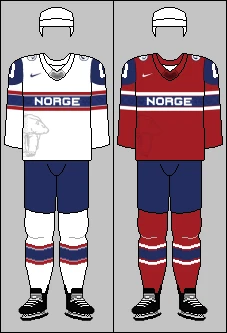
Lillehammer IK
Norwegian ice hockey club, 1994 champions, Olympic-era pioneers.

Lillehammer Ishockeyklubb, based in Lillehammer, Norway, competes in the EliteHockey Ligaen (EHL). The team plays its home games at Eidsiva Arena (Kristins Hall), with occasional matches at Håkons Hall.
The club was founded on 1 November 1957 and was an early force for ice hockey in the northern parts of eastern Norway. For its first three decades, the team played on natural ice under tough conditions, with only brief appearances in the second division. Despite this, the club developed notable players, including brothers Arne and Lars Bergseng, who became top players in the first division during the 1980s.
Lillehammer’s bid for the 1994 Winter Olympics proved transformative. Kristins Hall was built and opened in 1988, and after the city secured the Games, local enthusiasm propelled the club from the third division to the top-tier Eliteserien in just two seasons (1989–90 to 1990–91). In spring 1994, following the Olympics, Lillehammer defeated Vålerenga in the playoff finals (3-1 in the series) to win its first and only Norwegian Championship.
After the Olympic-era highs, the club struggled to maintain that level. Financial troubles threatened its survival several times. Today, Lillehammer is recognized for its strong youth program, supported by the NTG hockey college, which has produced players such as Chicago Blackhawks forward Andreas Martinsen, former Columbus Blue Jackets and Philadelphia Flyers forward Ole Kristian Tollefsen, and Per Åge Skrøder, who played for MODO Hockey in the Swedish Elite League.
Following difficulties in the late 1990s and 2000s, Lillehammer became one of Norway’s better clubs in the early 2010s thanks to excellent player development. In 2014, the team came within one game of the finals, losing in seven games to eventual champion Stavanger Oilers. That was followed by two rough seasons, with the 2015–16 campaign ending in relegation play. However, just two seasons later, in 2017–18, the club achieved its second-best season ever, earning a bronze medal in the regular season and reaching the playoffs finals for the first time in 24 years.
On 18 November 2017, the club hosted a Hockey Classic event against Storhamar at Håkons Hall—the first time the rivals had played there since 1995. The game was a financial and social success, setting a new indoor Norwegian hockey attendance record of 10,031. A second Hockey Classic took place
- founded
- 1 November 1957
- nationality
- Norwegian
- home_arena
- Eidsiva Arena (Kristins Hall), occasionally Håkons Hall
- league
- EliteHockey Ligaen (EHL)
- championships
- 1 (1994)
- known_for
- 1994 Norwegian Championship; producing NHL players Andreas Martinsen and Ole Kristian Tollefsen
Lore & Background
Lillehammer IK was founded on 1 November 1957 and played on natural ice for its first thirty years, with limited success reaching only the second tier. The club produced notable talents including brothers Arne and Lars Bergseng, who became top players in the 1980s. The turning point came with Lillehammer's candidacy for the 1994 Winter Olympics, leading to the construction of Kristins Hall in 1988. Backed by enormous local interest, the club surged from the third division to the Eliteserien in two seasons (1989–90 to 1990–91), and in spring 1994, after the Olympics, defeated Vålerenga in the playoff finals (3-1 in the series) to claim its first and only Norwegian Championship.
Reader's Guide
Lillehammer IK's significance lies in its rapid rise from the third division to a national championship, fueled by the 1994 Winter Olympics. The club has faced economic struggles since the 1990s but is known for a strong youth department and the hockey college NTG, producing NHL players Andreas Martinsen and Ole Kristian Tollefsen, as well as Swedish Elite League player Per Åge Skrøder. After a period of decline, the club rebounded in the 2010s, reaching the finals in 2018 for the first time in 24 years. The Hockey Classic events in 2017 and 2018, held at Håkons Hall, set a Norwegian indoor attendance record of 10,031 and demonstrated the club's enduring rivalry with Storhamar. Lillehammer IK remains a notable force in Norwegian hockey through player development and historic achievements.
Did You Know?
- Lillehammer IK won its only Norwegian Championship in 1994, beating local rivals Storhamar Ishockey in the playoff finals.
- The club hosted the Hockey Classic in Håkons Hall on 18 November 2017, setting a Norwegian indoor hockey attendance record of 10,031.
- Former NHL players Andreas Martinsen and Ole Kristian Tollefsen developed through Lillehammer IK's youth system and the hockey college NTG.
- The club surged from the third division to the Eliteserien in only three years following Lillehammer's successful 1994 Winter Olympics bid.
Origins on Natural Ice
Lillehammer Ishockeyklubb traces its roots to 2 November 1957, when it was established as a pioneering force for ice hockey in the northern reaches of eastern Norway. For the first three decades of its existence, the club competed under what can only be described as rudimentary conditions, taking to natural ice rinks rather than modern facilities. Success during this era was modest at best, with the team managing only occasional appearances in the second tier of Norwegian league hockey. Yet even in those lean years, the club served as a crucible for talent. Two brothers, Arne and Lars Bergseng, emerged from Lillehammer's ranks to become among the finest players in the first division throughout the 1980s, proving that the club's developmental instincts were sound even when its competitive results were not. The natural-ice era defined the club's identity as a scrappy, community-rooted outfit that persisted long before infrastructure and funding would transform Norwegian hockey.
The Olympic Leap and a Championship
Lillehammer's bid to host the 1994 Winter Olympics became the single most transformative event in the club's history. The candidacy spurred the construction of Kristins Hall, a purpose-built hockey arena that opened in 1988 and gave the team a modern home for the first time. When the city was awarded the Games, the hockey club rode a wave of enormous local enthusiasm. In just three seasons, Lillehammer IK climbed from the third division all the way to the Eliteserien, the top flight of Norwegian hockey. The culmination came in the spring of 1994, immediately after the Olympic festivities had concluded. In the playoff finals, Lillehammer defeated their local rivals Storhamar Ishockey to capture the Norwegian Championship. It remains the club's only title to this day, a singular triumph born from the unique convergence of Olympic infrastructure, civic pride, and competitive momentum that no subsequent era has been able to replicate.
Hardship and the Youth Pipeline
The years following the 1994 championship brought a harsh reality check. Economic difficulties repeatedly threatened the club's very survival, and the high expectations set during the Olympic period proved nearly impossible to sustain. Rather than chasing short-term results, Lillehammer IK gradually redefined its identity around player development. The club built a well-regarded youth department, bolstered by the presence of the NTG hockey college in the community. This developmental focus yielded a steady stream of players who went on to compete at the highest levels abroad. Andreas Martinsen, currently with the Chicago Blackhawks, Ole Kristian Tollefsen, who played for the Columbus Blue Jackets and Philadelphia Flyers, and Per Åge Skrøder, formerly of MODO Hockey in Sweden's Elite League, all trace their formative hockey years to Lillehammer. The club's willingness to invest in young talent, even during its most financially precarious years, established a pipeline that continues to feed Norwegian and international hockey.
Resurgence and the Hockey Classic
After a turbulent stretch in the late 1990s and 2000s, Lillehammer IK reasserted itself in the early 2010s through the very player development that had become its hallmark. The 2014 season saw the team push to within a single game of the championship finals before falling in seven games to the eventual champion Stavanger Oilers. Two difficult seasons followed, the 2015-16 campaign ending in relegation play. Yet the club's resilience proved remarkable: within just two seasons it rebounded to its second-best finish ever in 2017-18, earning a bronze medal and reaching the playoff finals for the first time in 24 years. That same period also produced a cultural landmark. On 18 November 2017, the club hosted the Hockey Classic, a match against Storhamar in Håkons Hall, the first such rivalry game there since 1995. The event drew 10,031 spectators, setting a new indoor attendance record for Norwegian hockey. A second Classic in November 2018 attracted over 9,000 fans as Lillehammer edged Storhamar 3-2 following a memorable return by Alexander Reichenberg.
Frequently Asked Questions
Who is Lillehammer IK?
Lillehammer Ishockeyklubb is a Norwegian ice hockey club established on 1 November 1957 in Lillehammer, eastern Norway. The team is widely regarded as one of the pioneering forces that helped grow the sport in the northern part of the region.
What league does Lillehammer IK compete in?
The club currently plays in the EliteHockey Ligaen (EHL), the top professional tier of Norwegian ice hockey.
Where do Lillehammer IK's home games take place?
Their primary home venue is Eidsiva Arena, also referred to as Kristins Hall, though they occasionally host matches at Håkons Hall as well.
Has Lillehammer IK ever won a Norwegian championship?
Yes — the team claimed the Norwegian Championship in 1994, which stands as their only top-flight title to date. That single crown remains the defining achievement in the franchise's history.
Which NHL players did Lillehammer IK develop?
The club is best known for producing Andreas Martinsen and Ole Kristian Tollefsen, both of whom went on to professional careers in the NHL. Earlier in the program's history, brothers Arne and Lars Bergseng also emerged from the club as standout first-division talents.
More in Ice hockey teams in Norway 1-24
Spotted an error? Know more?
This is a living reference — every entry is fact-audited, and reader corrections feed straight into our audit queue. Suggest an edit · See this site's audit record